



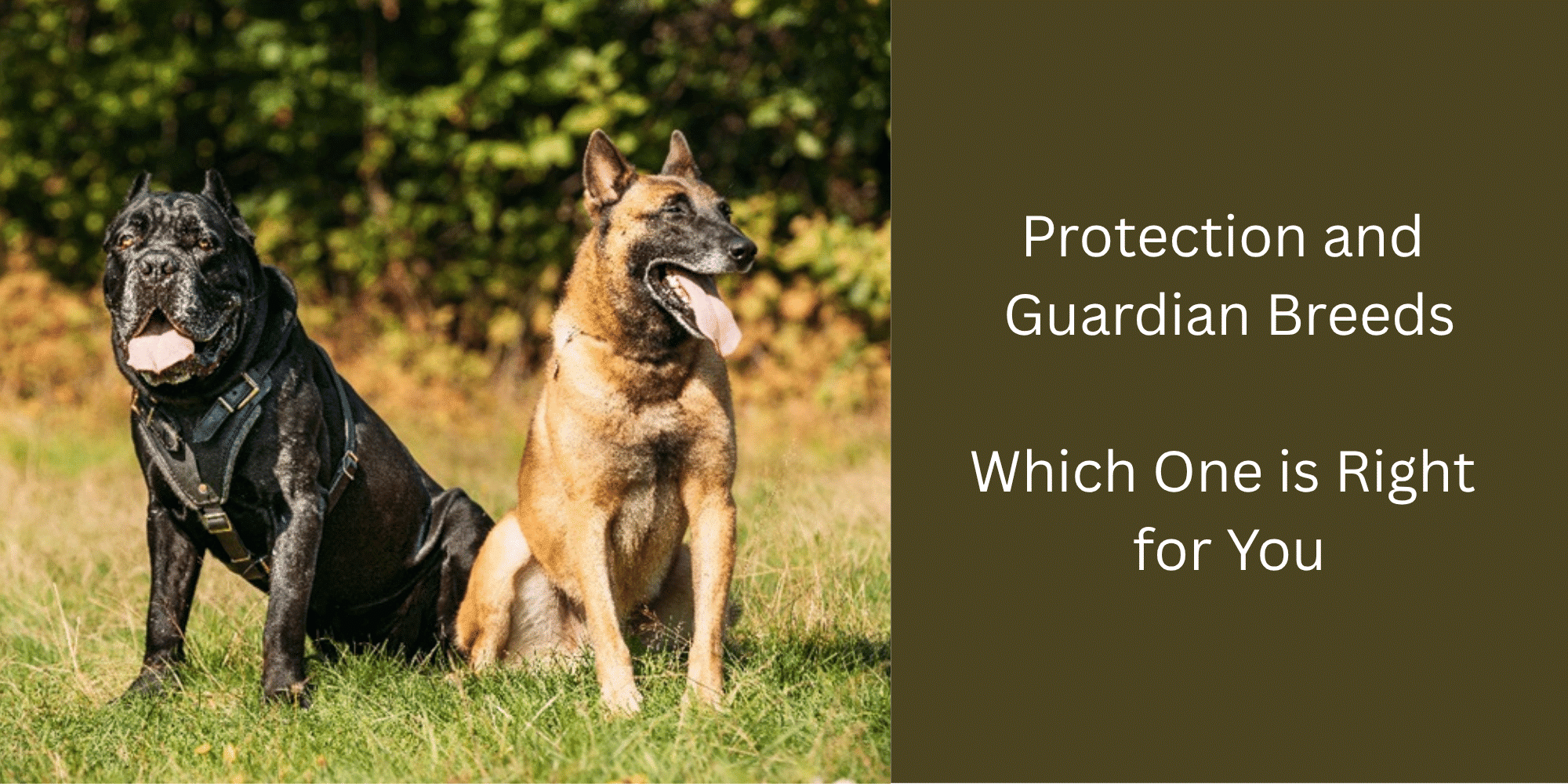
Most people picture a protection dog as a fearless guardian — loyal, obedient, and ready to defend their family at all costs. But that image skips the hard part.
Because protection breeds aren’t lapdogs. They’re not people-pleasers in the Golden Retriever sense. And without structure, consistency, and the right handling, they’re not ideal for first-time dog owners.
That said, there’s a big difference between a protection dog that’s raised to guard property and live in a kennel… and a personal protection dog raised in the home, trained to be part of the family, and conditioned to respond only when needed.
In this blog post, I’m tackling the topic of Protection dogs, some that cost more than your house, and others that you’ll have to make a hefty investment in training. This is not a video giving you a listicle of guardian and protection breeds. This is a video about you, and what it really takes to own one of these breeds, and what too many people get dangerously wrong.
In the uncertain times we live in, more people are turning to personal protection dogs.
But all it takes is one bite — one moment of misjudged behavior — to turn your “guardian” into a legal and financial nightmare.
Professionally trained adult protection dogs can cost anywhere from $55,000 to well over $100,000. That price covers more than obedience. You’re paying for genetics, development, stability, and professional handling — including training you, the human on the other end of the leash.

But here’s what most people miss:
The real gap isn’t just between a $100K protection dog and a $3,500 puppy from a breeder.
It’s the gap between what people think they’re getting… and what it actually takes to live successfully with one of these dogs.
Protection vs Guardian Breeds – There is a Difference
Most people don’t understand the difference between protection dogs and guardian breeds.
Mastiff-type breeds like the Cane Corso, Tibetan Mastiff or Boerboel aren’t vocal or flashy.
They’re the strong, silent types — calm, loyal, great with their families. They’re chilled until they’re not.

They don’t ramp up. They react. One minute they’re snoring on your couch. The next, they’re 150 pounds or more of judgment — and you may not like what they decide.
That’s what makes them so challenging for inexperienced owners. There are no neon signs that say “trouble’s brewing.” Just a switch that flips.
Now compare that to a Doberman or German Shepherd — breeds that come with built-in deterrence. Breeds that people cross the street when they see you coming. I know. Because when I walked my Dobermans, or Shepherds, it’s like the parting of the Red Sea. But these dogs are typically more handler-focused. They look to you for direction. They want a job. They want clarity.

That difference between protection and guardian matters — especially when something goes wrong.
Because once your dog takes action, you’re responsible — no matter what triggered it.
The Financial and Legal Liability of Owning a Protection or Guardian Breed
Let’s get blunt here
You are personally liable for everything your dog does. If your dog bites someone — even if provoked — you could face massive legal and vet bills, not to mention civil lawsuits, criminal charges, mandatory euthanasia, even homeowners insurance cancellation
A single incident can cost you tens of thousands — or more.
And if you try to pass that dog off to a rescue? Many won’t take dogs with a bite history. You may be legally forced to put your dog down.
Let’s go back to the six-figure dogs.
That price gets you more than a well-trained companion. You’re getting a dog whose early development was managed from day one. Whose bite strength, stress response, and control under pressure have been tested and shaped by professionals.
And you’re getting a dog who comes with a manual. Not a literal one — but handler training.
Because if you can’t communicate with that dog in high-stress situations, everything falls apart.
What YOU need to Own a Protection Dog
But even that level of preparation won’t save you if you don’t have the right mindset.
These dogs need:
✅ Quiet confidence and clear, calm leadership
✅ Absolute consistency in your commands
✅ Mental engagement meaning when you walk them, when you play with them, you’re not on your phone
✅ And they need structure and parameters, what you will and will not tolerate.
Because these dogs just don’t follow commands, they follow people they respect.
Women and Protection Dogs
And let’s not pretend that owning one of these dogs is only about strength. For women especially, the challenges are often underestimated.
It’s not about muscle. It’s about presence. Leadership. Self-awareness. Because when you walk a Doberman or Cane Corso down the street, you’re not just walking a dog — you’re sending a message. People are watching and the dog knows it.
Now, on the other end of the spectrum, I see people buy protection-breed puppies and assume instincts will take care of the rest. They won’t.
Real protection training — if the dog has the right temperament — can easily cost $15,000 to $25,000. And without it? You’re not raising a protector. You’re raising a reactive, unpredictable liability.
Because the difference between protection and aggression is structure, socialization, and control.
The Bottom Line
So in summary, here’s the truth:
Whether you spend $3,500, $4000, $5000 for a puppy, or $100,000 for a professionally trained dog, the price tag is just the beginning.
The real cost is the commitment. The lifestyle. The daily responsibility of being the kind of person your dog can trust — and the public can trust you to handle.
So before you get swept up in the idea of owning a protection dog … ask yourself ….
Can I afford to do this wrong?
Because if the answer is no, let’s make sure you get it right.
So if you’re thinking of bringing a personal protection dog into your home, book a complimentary call with me and let’s be sure you get it right.
https://calendly.com/thepupmommy/30-minute-discovery-call
Discover more from The Pup Mommy
Subscribe to get the latest posts sent to your email.

Leave a Reply